Tree Removal
Planned removal for dead, damaged, unstable, unwanted or poorly located trees where keeping the tree no longer makes practical sense.
Learn more →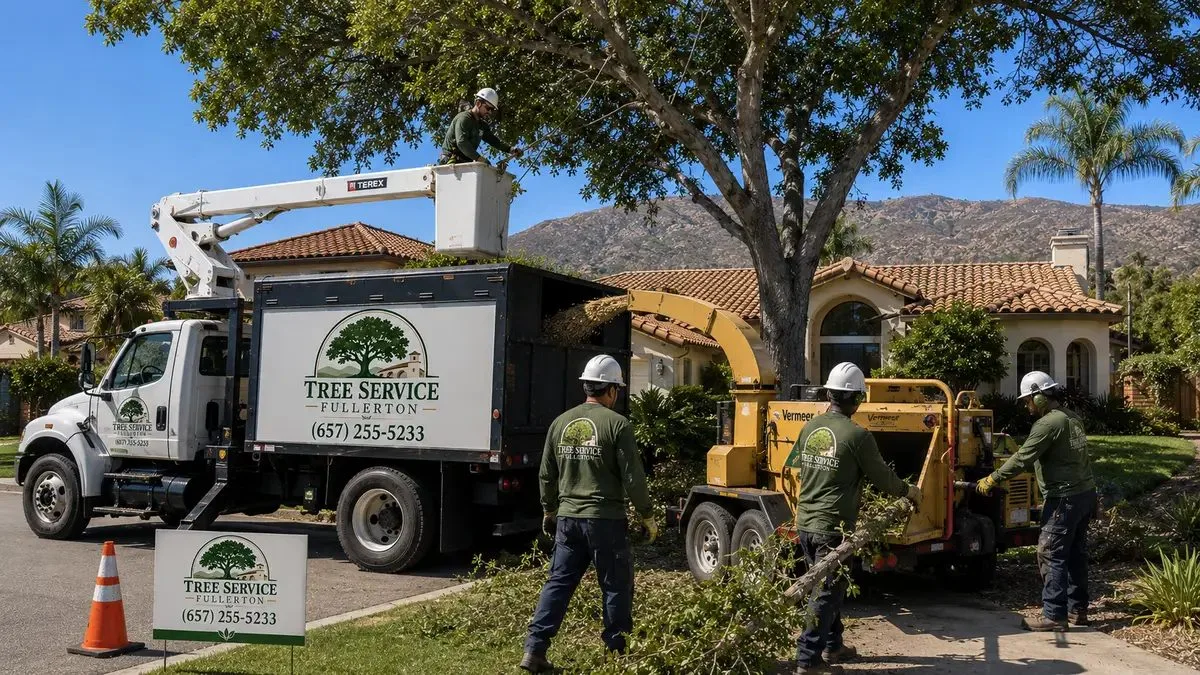
Tree care for homes and managed properties across North Orange County
Request an estimate for tree removal, trimming and crown reduction, palm work, eucalyptus removal or urgent tree problems in Fullerton and nearby communities.
Local tree care
Tree Service Fullerton helps property owners arrange estimates for tree work across Fullerton and nearby Orange County communities. Common enquiries include trees that have become too large for their setting, branches growing close to roofs or driveways, dead or broken limbs, tall palms, mature eucalyptus and trees whose condition or position makes removal worth considering.
Good tree care starts with the property as well as the tree. A broad canopy beside a tiled roof creates different constraints from a tree in an open front yard. A palm beside a pool presents different access and debris-handling issues from a large eucalyptus near a wall or neighboring property. Gates, narrow side yards, slopes, parked vehicles, irrigation, planted beds and overhead obstacles can all change what equipment and work sequence make sense.
Tell us what you can see, where the tree stands and what you want to achieve. A site-specific estimate can then take account of tree size, visible condition, access, species and the space around the work area.
Core services
Our services cover the main tree-care problems Fullerton property owners encounter, from routine pruning and palm maintenance to difficult removals and urgent storm damage.
Planned removal for dead, damaged, unstable, unwanted or poorly located trees where keeping the tree no longer makes practical sense.
Learn more →Selective pruning for clearance, deadwood and overextended growth, plus controlled reduction where a canopy has become too large for the available space.
Learn more →Help arranging urgent assessment for fallen trees, broken major limbs, sudden leaning and storm-related damage.
Learn more →Maintenance for dead fronds and accumulated palm material, or complete removal when a palm is damaged, unwanted or unsuitable for its position.
Learn more →Careful planning for large, damaged, declining or poorly placed eucalyptus where height, heavy wood and nearby structures affect the job.
Learn more →Fullerton property context
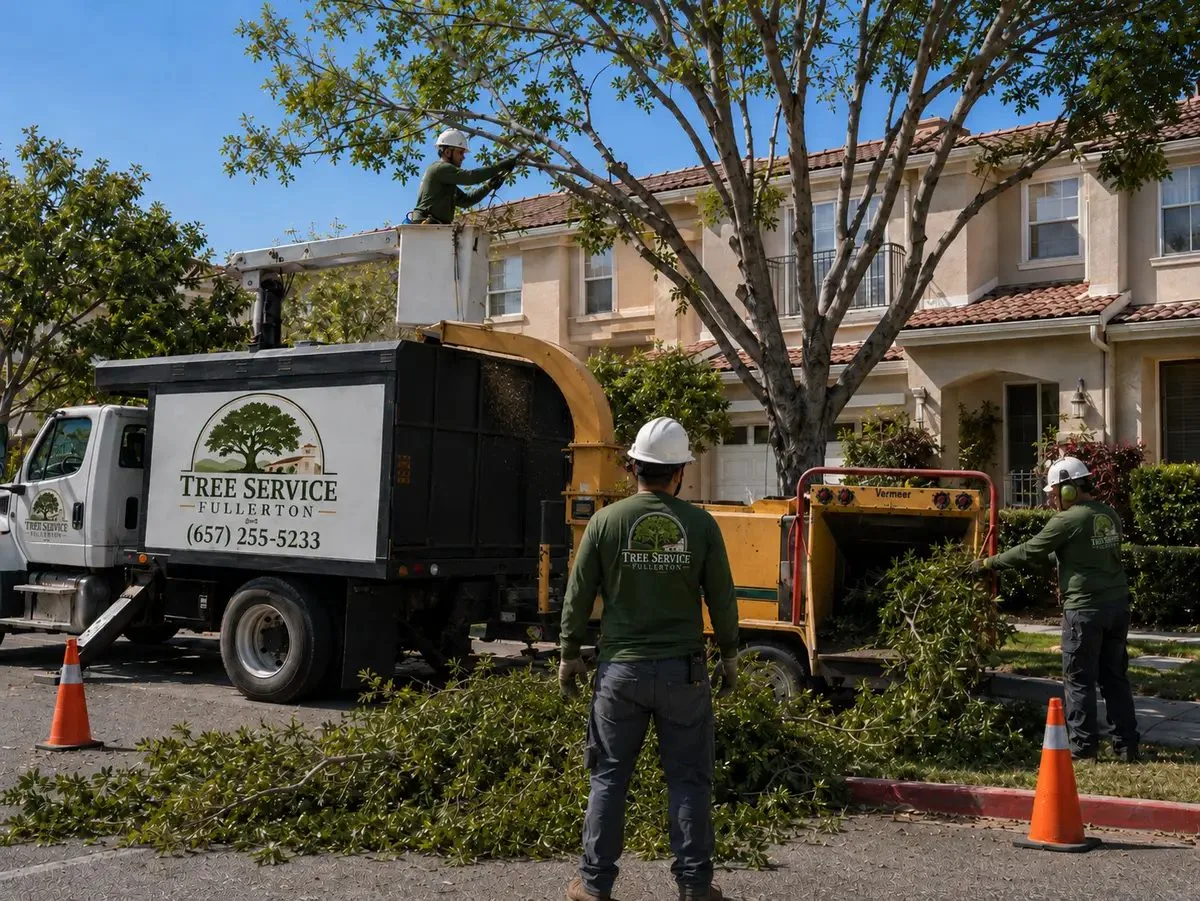
Fullerton has a varied mix of established homes, newer residential areas, multi-unit property, commercial sites and managed landscapes. Mature trees are often close to roofs, driveways, patios, walls, sidewalks and neighboring property. That means access and property protection can be just as important as the cut itself. A smaller tree in a confined yard can sometimes be more complicated than a larger tree with open working space.
Routine tree trimming and pruning may be useful where branches need sensible clearance from roofs, walkways, driveways or neighboring space. Where an otherwise retainable canopy has become too broad or tall for its position, crown reduction may be considered instead of indiscriminate topping. When a tree is dead, badly damaged, unstable, unsuitable for the available space or repeatedly causing serious conflicts, removal can become the more practical option.
Palms and eucalyptus bring different handling issues. Tall palms concentrate work vertically around the crown and trunk, while mature eucalyptus can produce long limbs and substantial wood. In both cases the space below, access route and nearby structures should shape the work plan.
Common reasons to call
Long limbs rubbing a roof, crowding gutters, blocking access or extending into neighboring space may justify selective trimming rather than heavy canopy removal.
Visible deadwood, storm breakage or a partially failed branch is a clear reason to have the tree looked at before more material comes down.
Some trees simply become too large for a yard, courtyard or planting strip. The realistic options may include reduction, continued maintenance or removal.
A new lean, exposed root plate, trunk damage or sudden canopy change deserves attention. Keep clear of a visibly unstable tree while arranging advice.
Tall palms can produce repeated frond and debris problems. Trimming may manage the issue; removal may make more sense when the palm no longer fits the site.
Remodeling, new hardscape, access changes or a landscape redesign can leave an existing tree in conflict with the future use of the property.
Removal versus trimming
Healthy trees often benefit from proportionate maintenance where the issue is clearance, dead branches, an overextended limb or a crowded section of canopy. Selective trimming can solve a practical conflict while retaining useful shade and structure. Crown reduction can also be relevant when overall spread or height needs to be managed more deliberately.
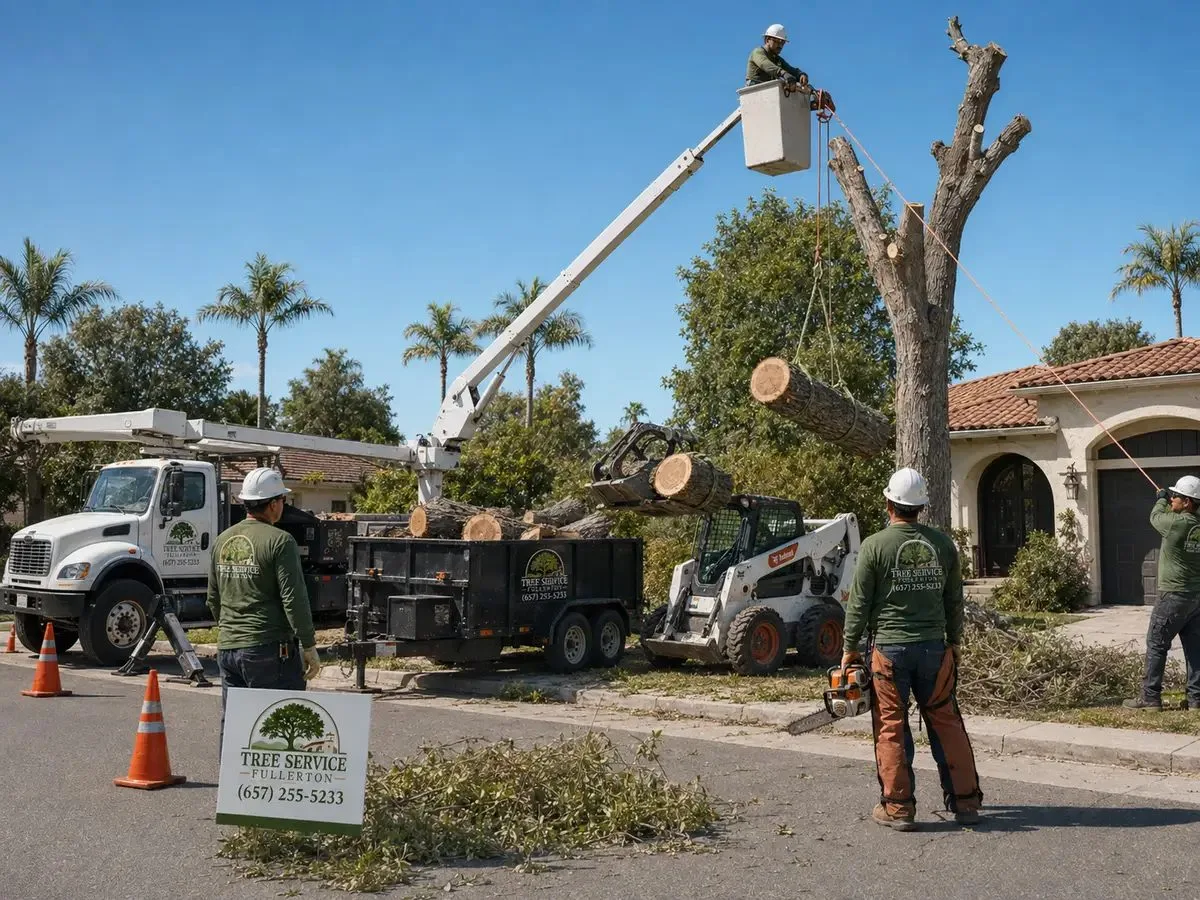
Removal becomes more relevant when the tree is dead, badly damaged, significantly unstable, repeatedly failing, poorly positioned or no longer practical to retain. The decision should be tied to the individual tree and property rather than a generic rule or a preference for the biggest possible job.
Where the concern involves diagnosis, formal tree-risk assessment or a specialist opinion on condition, ask whether a qualified arborist is appropriate. Complicated condition or risk questions deserve the right level of expertise.
How the job is shaped
Height, trunk diameter, canopy spread, lean and branch distribution influence the amount of work and the size of material that must be controlled.
Dead, split, storm-damaged or partially uprooted trees can behave differently from healthy trees and may require a more cautious sequence.
Gate width, side yards, slopes, parking and the ability to position appropriate equipment can materially change the practical method.
Roofs, patios, pools, walls, fences, vehicles and established planting can reduce the available working or landing zone.
A large canopy or heavy trunk produces substantial material. The route from the tree to a chipper or loading area is part of the work.
Emergency work after a failure can involve unstable material, blocked access and changing conditions, so the scope may differ from planned maintenance.
Photographs can help with initial screening, but complex trees often need the surrounding property and access conditions considered before the final scope is clear.
A controlled process
The exact method belongs to the tree professional handling the job, but the work scope should be understandable. A useful estimate explains what is being trimmed or removed, how the surrounding property affects the job, what cleanup is included and any limitations likely to change the work.
For trimming and crown reduction, it should also be clear what the pruning is intended to accomplish. Heavy topping or stripping a canopy simply to make a tree smaller is not the same as targeted pruning for clearance, deadwood, structure or controlled reduction.
North Orange County coverage
Fullerton is the primary location, including Sunny Hills, Amerige Heights and Raymond Hills. The wider service area extends into nearby Orange County communities.
Different properties, different priorities
Residential work often revolves around roofs, patios, pools, fences, gardens and narrow side access. Photos of gates, access routes and the area below the canopy can help explain the job before an on-site visit.
Multi-unit and managed common areas can add pedestrian routes, parked vehicles, irrigation, lighting and maintained planting to the work zone. Clear scope and debris handling matter.
Business and managed sites may need tree work planned around parking, deliveries, customers and normal access. Larger removals can require a clearly defined work zone and material route.
Questions before you book
Removal may make sense when a tree is dead, severely damaged, significantly unstable, repeatedly failing, badly located or no longer practical for the space. Trimming or crown reduction is often more appropriate when the issue is dead branches, roof clearance or overextended growth.
Sometimes. Selective pruning or crown reduction may address excessive spread or height while retaining the tree. The suitability depends on the tree's structure, condition and the result you need.
Emergency enquiries can include fallen trees, major broken limbs, partial failures and sudden leaning. If electrical lines or another public utility are involved, contact the relevant utility or emergency authority first and keep clear of the area.
Palm services include trimming for dead fronds and accumulated material as well as complete removal when a palm is declining, unwanted, damaged or no longer suitable for its location.
Eucalyptus removal is one of the featured services. Large specimens can require careful planning because of their height, heavy wood, long limbs, access and the proximity of buildings or neighboring property.
Pricing varies with tree size, species, condition, access, equipment needs, nearby structures, debris volume and the exact scope. A site-specific estimate is more useful than a generic price range.
Fullerton is the primary location, with coverage extending to Sunny Hills, Amerige Heights, Raymond Hills, Anaheim, Brea, Placentia, Buena Park, La Habra, Yorba Linda, La Mirada, Orange and Garden Grove.
Describe the tree, where it stands and what concerns you. Request an estimate before guessing at the right solution.
Request a Free Estimate (657) 255-5233