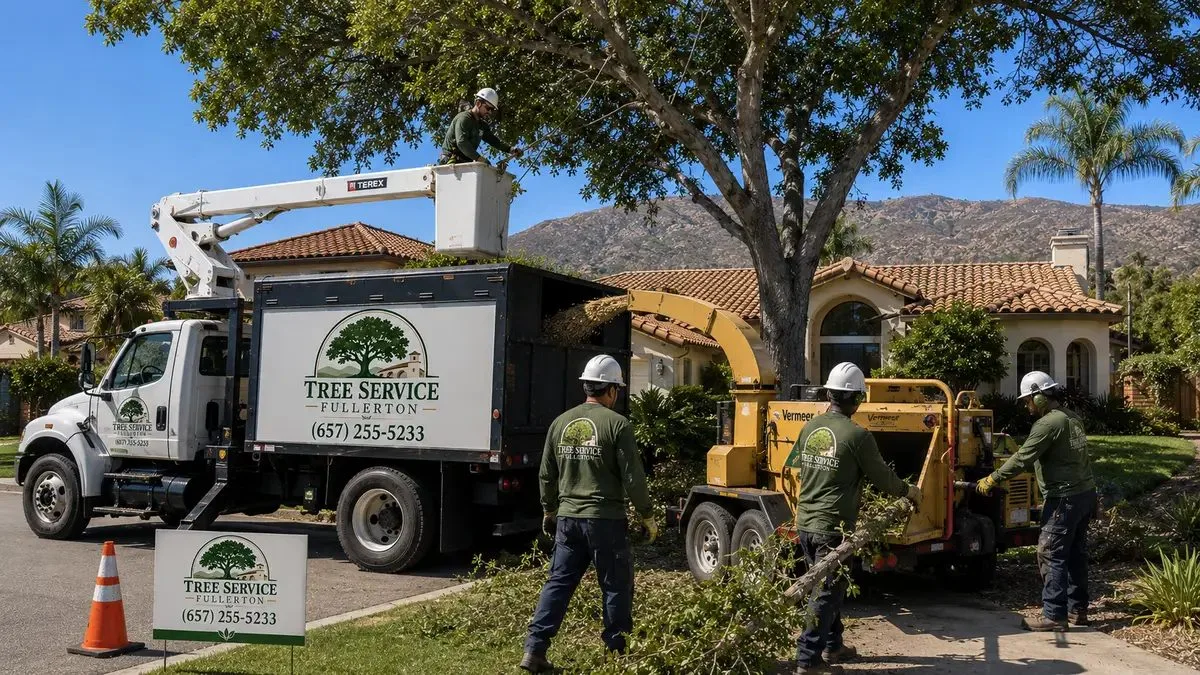
Fullerton Tree Removal
Tree Removal for Difficult Properties
Request an estimate for your tree removal project. Get a Free Estimate
Fullerton Tree Removal
Request an estimate for your tree removal project. Get a Free Estimate
Tree removal is usually considered when keeping a tree no longer makes sense for the property. The tree may be dead, declining, badly damaged, leaning, repeatedly dropping large limbs, interfering with structures, or growing in a space that cannot reasonably support its mature size. In other cases, a homeowner may be changing the landscape or dealing with roots, heavy shade, recurring maintenance, or a tree positioned too close to a building.
Tree Service Fullerton approaches removal as a property-specific job. Before work begins, we consider the tree's size and branching, surrounding structures, fences, driveways, pools, landscaping, neighboring property, and the space available for equipment and debris handling. Large trees in compact Fullerton lots often require controlled, section-by-section work rather than a simple open-area removal.
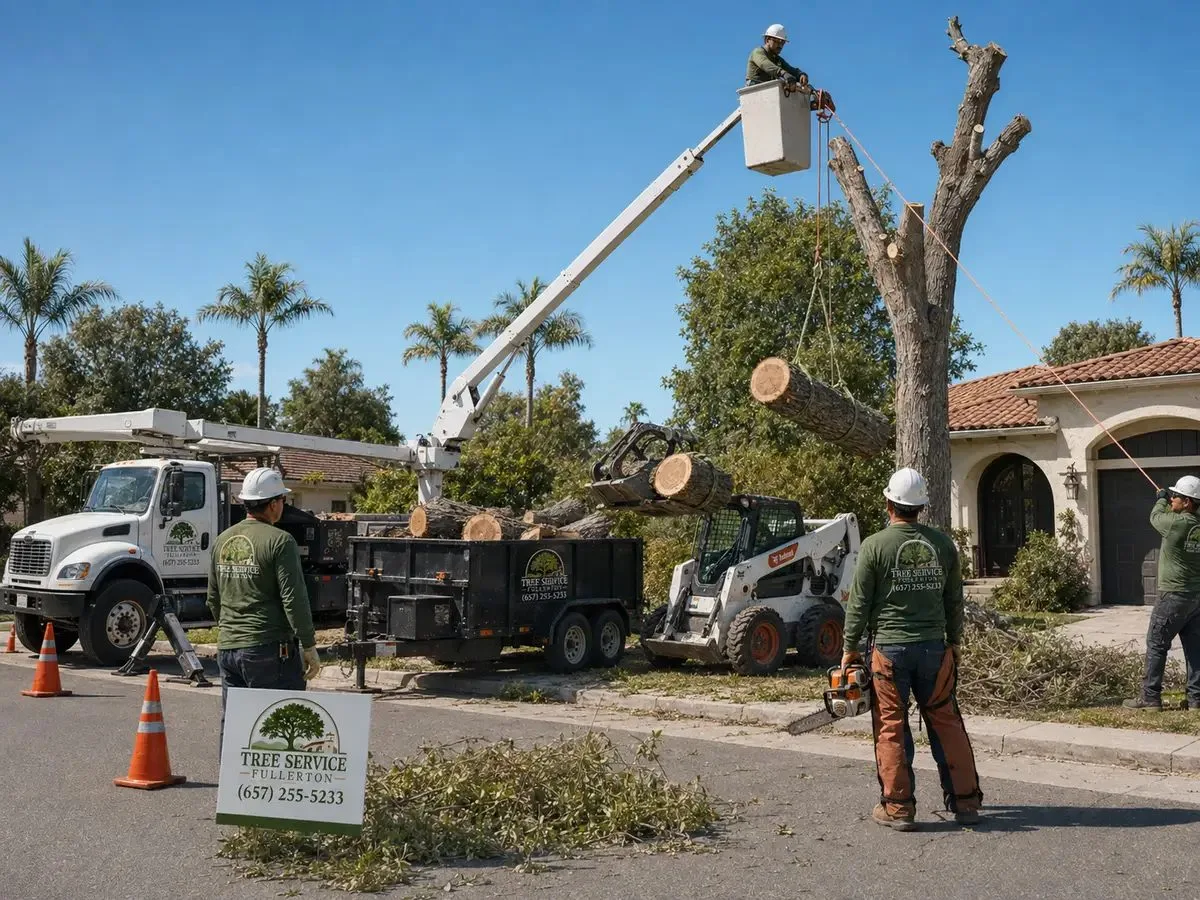
The safest and most efficient approach depends on the tree and the space around it. A small ornamental tree in an open yard is a very different project from a mature tree extending over a roof or property line. We build the work plan around the actual conditions rather than relying on one standard method.
A dead or severely declining tree can lose structural strength over time. When removal is recommended, the work is planned to limit uncontrolled branch or trunk movement and to keep the work zone organized around the property.
Large trees often need to be dismantled in manageable sections. Branches and trunk pieces may be lowered or directed into specific areas depending on roofs, fences, landscaping, vehicles, and available working space.
Trees close to homes, garages, walls, patios, pools, and neighboring property require additional planning. We review the working zone and determine how sections can be handled without relying on a broad drop area.
A lean does not automatically mean a tree must be removed, but a new or increasing lean, damaged root area, trunk defects, or major branch failure deserves attention. We look at the situation and discuss the practical next step.
Tree removal produces substantial branches, wood, leaves, and saw debris. The work plan includes how material will be moved through the property and what cleanup is included in the agreed scope.
Tree removal prices are driven by the individual tree and property. A simple open-site removal and a sectional removal over structures are fundamentally different jobs.
Height, trunk diameter, canopy spread and branch distribution affect the volume and size of material to be controlled.
Dead, split, damaged or unstable trees can require a different sequence from healthy trees.
Gate width, parking, slopes and available equipment positions can materially change the practical method.
Roofs, walls, pools, fences, neighboring property and the route for moving wood and branches all affect the final scope.
Removal decisions account for the surrounding home, yard, fencing, access, landscaping, and neighboring property rather than focusing only on the trunk.
Some trees can be handled quickly in open space. Others need sectional removal and a much more controlled working area.
We explain what is included in the removal and cleanup so you know what the crew is planning to do.
Tighter lots, mature trees, hillside conditions, and mixed landscaping all affect how removal work is planned around Fullerton and nearby Orange County communities.
Have a tree you think may need to come down? Describe the tree and its location on the property.
Free — no obligations
We look at tree size, visible condition, nearby structures, working space, access, and the areas that need protection.
We discuss what will be removed, how debris will be handled, and any site-specific considerations that may affect the work.
Vehicles, outdoor furniture, gates, and other obstacles may need to be moved before the crew starts.
The crew follows the method appropriate for the tree and available space, keeping the work area controlled as material comes down.
Branches, wood, and work debris included in the scope are gathered and handled before the project is wrapped up.